April 8th, 2026 - Press release

A new study by the Hospital del Mar Research Institute and Universitat Ramon Llull establishes for the first time a direct link between good physical fitness and a reduced risk of suffering from more than thirty diseases.
The study, published in Medicine & Science in Sports & Exercise, identifies a causal relationship between a greater genetic predisposition for adequate cardiorespiratory capacity and a lower risk of developing these conditions.
The results suggest that increasing aerobic activity may provide protection against various cardiovascular, inflammatory, and other diseases.
Being physically fit improves our health and keeps illness at bay. This relationship has long been assumed for numerous disorders, but until now there has been no scientific evidence demonstrating a causal link between the beneficial effects of physical exercise and a reduced risk of becoming ill. A new study, published in Medicine & Science in Sports & Exercise, has now confirmed this. The research was led by a team from the Hospital del Mar Research Institute and Universitat Ramon Llull and has established a relationship between genetics associated with good cardiorespiratory fitness and around thirty diseases.
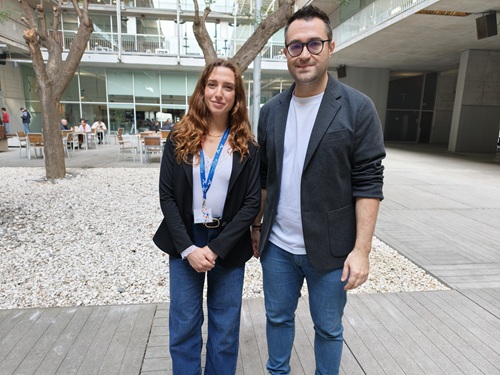
Eleonora Fornara, Álvaro Hernáez
"Our study results indicate that there is a potentially causal effect between good physical fitness-through good cardiorespiratory fitness-and good health", explains Eleonora Fornara, a researcher at the Hospital del Mar Research Institute and the Blanquerna Faculty of Health Sciences at Universitat Ramon Llull. To reach this conclusion, the research team studied the association between genetic predisposition to higher cardiorespiratory capacity-understood as the body's ability to respond efficiently to physical exertion-and the occurrence of 712 health conditions for which genetic information was available in a European population. Due to the exploratory nature of the study, the results were validated in a two-phase analysis using strict filters to avoid false positives, ultimately selecting 34 conditions. "For the first time, we have been able to establish a potential direct cause-and-effect relationship between being fit and numerous diseases through complex genetic analyses", Eleonora Fornara adds.
The results show that individuals with a high genetic predisposition to be physically fit have a lower risk of certain cardiovascular conditions, such as a specific type of ischemic stroke. They also exhibit less arterial stiffness and lower diastolic blood pressure. At the same time, they show better health in metabolic and inflammatory aspects, with less excess weight and body fat, and a reduced risk of developing diabetes and asthma, along with improved bone health and better liver function. Various markers related to thrombosis and platelets also improve, as well as those linked to academic performance.
On the other hand, the study confirmed some negative effects already known in people who engage in intense exercise, such as a higher risk of atrial fibrillation and increased systolic blood pressure.
"Our findings reinforce the evidence that engaging in physical activity and maintaining good physical fitness has a preventive effect on our health", says Dr. Marta Hernández, also a researcher at the Blanquerna Faculty of Health Sciences at Universitat Ramon Llull. In this regard, Dr. Álvaro Hernáez, a researcher at the Hospital del Mar Research Institute and the Cardiovascular Diseases area of CIBER (CIBERCV), and a professor at the same faculty, states: "We have verified the observational evidence available until now and demonstrated that there is a cause-and-effect relationship between good physical fitness and good health. Therefore, we can say that recommendations encouraging people to improve their physical fitness are supported by scientific evidence, and we can promote public health actions and primary care recommendations-because it works".
The study received support from the Cardiovascular Diseases (CIBERCV), Obesity and Nutrition (CIBEROBN), and Epidemiology and Public Health (CIBERESP) areas of CIBER.
It was funded by the Instituto de Salud Carlos III (PI24/00182, FI25/00006) and Universitat Ramon Llull.
Fornara E, Hernández MH, Fernández-Sanlés A, Hernando-Redondo J, Camps-Vilaró A, Polo-Alonso S, Lassale C, Dégano IR, Elosua R, Schröder H, Marrugat J, Hernáez Á. Aerobic Fitness and Health-Related Phenotypes: A Two-Stage Phenome-Wide Mendelian Randomization Study. Med Sci Sports Exerc. 2026 Mar 19. doi: 10.1249/MSS.0000000000003975. Epub ahead of print. PMID: 41851812
Parc Salut Mar
Passeig Marítim 25-29 Barcelona 08003
See location on Google maps
Phone: 93 248 30 00 · Fax: 93 248 32 54
Information request


© 2006 - 2026 Hospital del Mar · Legal notice and Privacy Police | Cookie Policy | Accessibility